
Learn how to read the Nutrition Facts table on food packages in four simple steps. This guide makes it easy to compare products and make healthier choices with confidence.
Ever flipped over a food package and felt totally overwhelmed by the Nutrition Facts panel? Or maybe you just have no idea where to start?! You’re not alone! At first glance, food packaging can have a lot of information on them. It can fee like there's a lot of information to sort through—but with a few simple steps, it becomes a powerful tool to help you make healthier and more informed choices.
Whether you're trying to eat a healthier diet, manage your weight, or just become more aware of what’s in your food, the Nutrition Facts label can be your friend. It's my go to when grocery shopping and it can be yours too! Here are 4 simple steps to get you started:
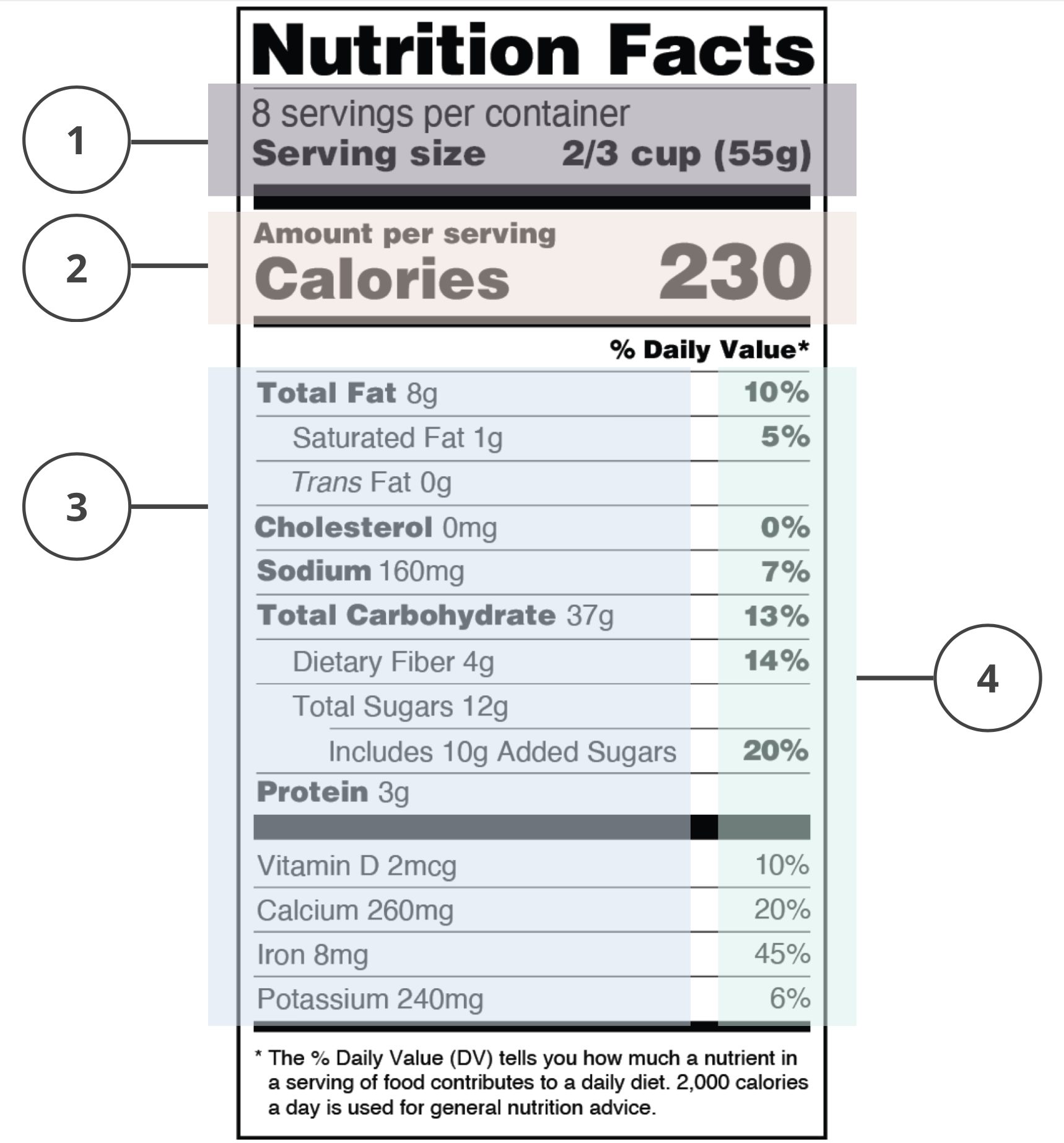
1. Start with the Serving Size
The very first thing to look at is the serving size. Every number on the nutrition facts table—from calories to fiber and protein—is based on this serving.

Important to know:
- The serving size is not necessarily how much you should eat.
- It reflects what people typically eat—not always a “healthy” portion.
- If you eat more or less than the serving size, you’ll need to adjust the numbers accordingly. This means doing some quick math in the grocery store when choosing your foods.
For example, if a serving is 1 cup and you normally eat 2 cups, you’ll need to double all the nutrients listed.
2. Check the Calories
Calories tell you how much energy you’re getting from one serving of the food.
If you're trying to manage your calorie intake for weight loss or health goals, this is where you can check if a product fits your needs.

Remember, if you eat more than one serving, you'll need to multiply the nutrition by your estimated serving size. For example, if you usually eat 2 times the declared serving size, you would double the nutrition info.
3. Look at the Nutrients
This is where you can dig a little deeper. There are many different nutrients listed here, and include different measurements like grams, milligrams, and micrograms.
What to pay attention to when comparing foods is the amounts of certain nutrients.
These technically aren't good or bad, it is just what matters most to your in your diet, and what your health priorities are.
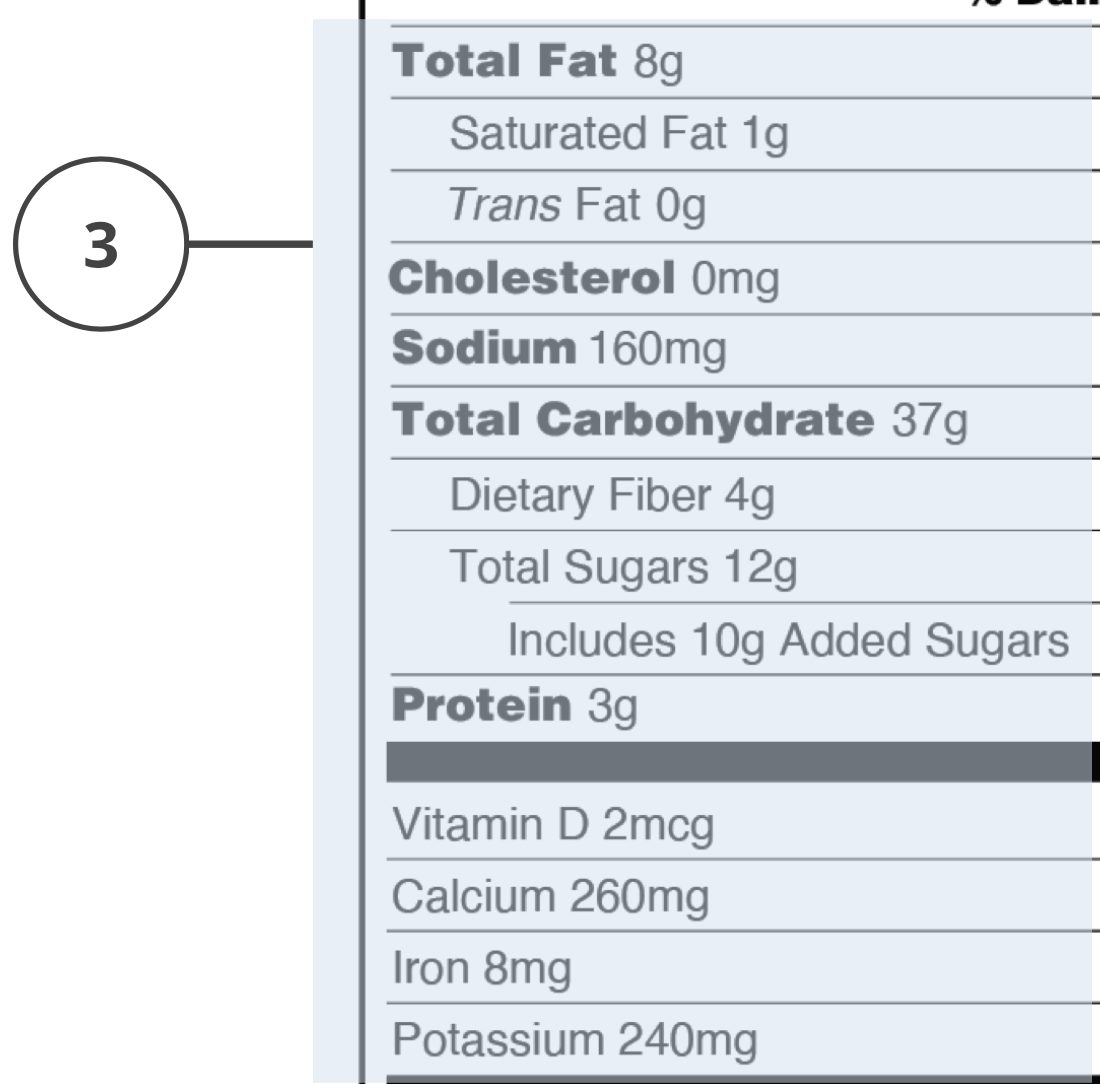
Here are some nutrients you may want more of, like:
- Fiber (helps with digestion and feeling full)
- Protein (helps build and repair tissues, and keeps you feeling full)
- Iron, calcium, vitamin D (essential for overall health)
Here are some nutrients you may want less of, such as:
- Sodium (too much can raise blood pressure)
- Sugar (can sneak in more calories without nutrients)
- Fat (can be a large source of energy)
When comparing products, look at both the amounts (grams or milligrams) and the % Daily Value to guide you (more on that below).
4. Use the % Daily Value (%DV)

This number helps you quickly see whether a food is high or low in a specific nutrient.
- 5% DV or less = Low
- 20% DV or more = High
This is a great shortcut when you’re in a rush. For example, if you’re looking to boost your iron intake, a product with 25% DV of iron is a great pick. On the flip side, if something has 25% DV of sodium, you might want to skip or limit it.
At the bottom of most nutrition facts tables is the statement about what the % Daily Value means. It's important to note that the percentages are based on consuming 2000 calories per day.

Because there are many different dietary needs in the population, this doesn't reflect the needs of all people. For example, a highly active athlete would likely need to consume more than these amounts, and a very inactive person would likely require less.
Start Small, Build Confidence
Like any skill, reading food labels takes a bit of practice. Don’t stress if your grocery trips take longer at first—it’s totally normal, and you should expect it! Once you start reading food labels, it will take you more time at the grocery store.
But over the course of a few trips, you’ll get to know which products you love and trust, and comparing labels will become second nature. In most cases, you'll be able to just grab your usual items after a few grocery trips where you've read the labels.
Reading the Nutrition Facts panel is one of the simplest ways to take control of your health and start making more informed decisions—one label at a time. Next on the to-do list for your health is to give this a try and in a future blog post, I will go over the ingredient statement and other parts of the label to read.
Want to Learn More?
If you're ready for a deeper dive, the FDA has a great resource that explains every part of the Nutrition Facts label in more detail: How to Understand and Use the Nutrition Facts Label (FDA.gov).